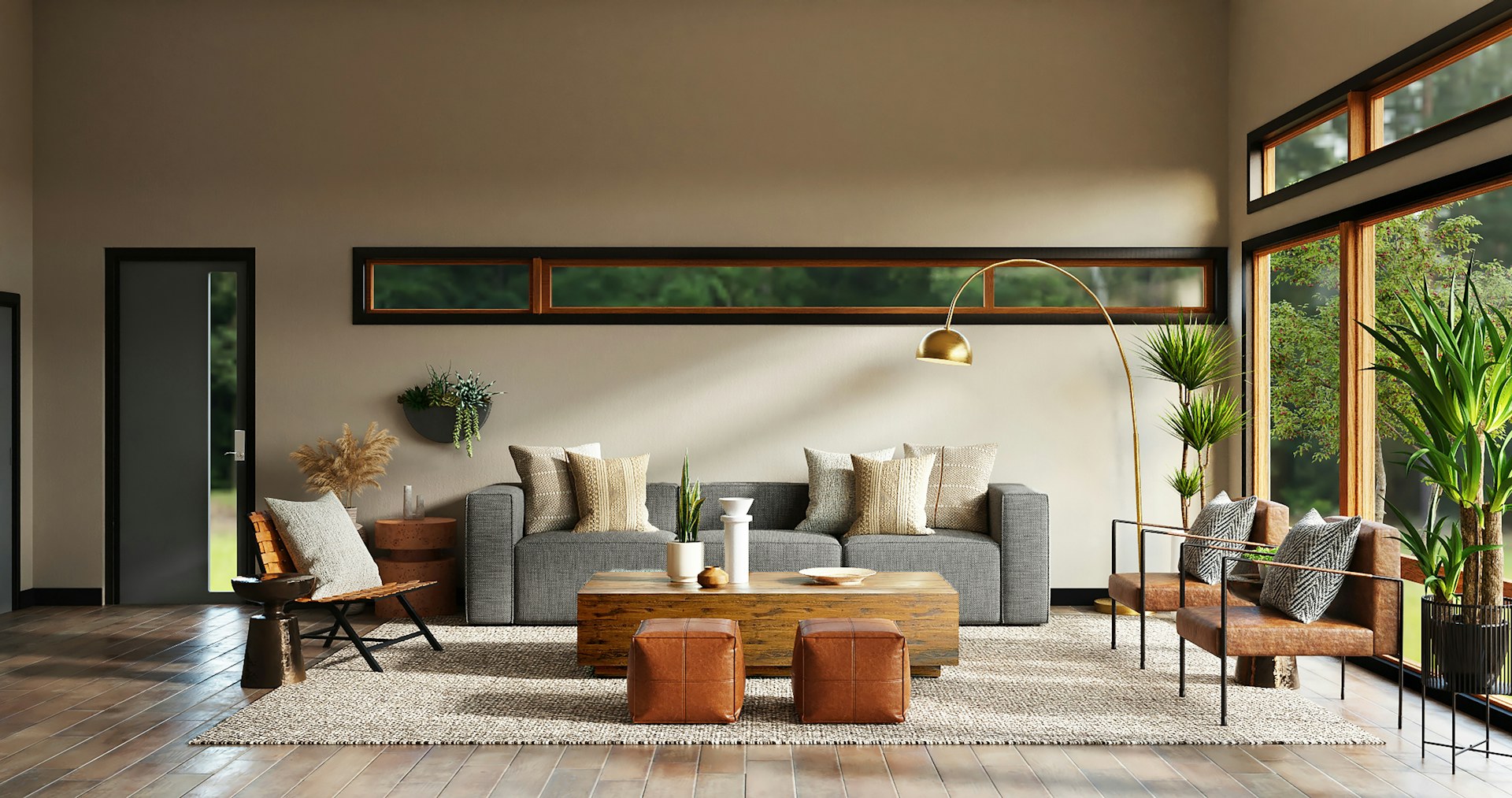

Smart Home Trends in 2026: What to Invest In (Ecuador Focus)
A practical guide to premium home automation, networking, and security: Matter, Thread, Wi-Fi 7, on-device logic, and energy efficiency for Ecuador homeowners.
Smart Home Trends in 2026: What to Invest In (Ecuador Focus)
In 2026, home automation stopped being “random gadgets” and became infrastructure: stable networks, real cross-brand integration, automation that still works when the internet drops, and security systems that cut down false alarms.
At DomuLab we design projects for residences and commercial spaces in Guayaquil and across Ecuador, prioritizing aesthetics, structured cabling, and a simple experience for the people who live or work there. Based on what we’re seeing on projects right now, here are the trends that actually matter — and what to invest in first.
1. Matter + Thread: Less Friction, More Compatibility
Matter helps devices from different ecosystems coexist with fewer headaches. A Matter-certified light bulb can be controlled by Apple HomeKit, Google Home, and Amazon Alexa simultaneously — no proprietary bridges needed.
Thread improves reliability on low-power networks (sensors, locks, some actuators) with mesh behavior that’s more robust than Bluetooth and more energy-efficient than Wi-Fi for small sensors.
What this means for your project in practice:
- Fewer duplicate apps for basic device control
- Better resilience when device count grows
- Battery-powered sensors that last years, not months
What it doesn’t change: for premium integration — coordinated scenes, distributed AV, home theater, access control with proper logic — Matter and Thread are device-layer tools, not a platform replacement. Control4 remains the central orchestration layer for projects that require coherent, maintainable automation.
2. Network Infrastructure: The Invisible Foundation of “Tech Luxury”
A premium smart home doesn’t stand on “more Wi-Fi bars” alone. In 2026, the winning infrastructure recipe for Ecuador is:
- Cat6A structured cabling as the backbone to every AP, camera, and fixed device
- Professionally placed access points: 1 per 650-800 sq ft, ceiling-mounted, wired (not wireless backhaul)
- Segmentation (guest, IoT, cameras, AV, work) for security and performance stability
- PoE-capable managed switch for centralized power and monitoring
- Rack with UPS: the system keeps working through power fluctuations common in coastal Ecuador
If the network fails, everything else feels cheap — no matter how expensive the gear. Network investment is consistently the highest-ROI infrastructure spend in smart home projects.
Wi-Fi 7 context: Wi-Fi 7 is available and useful for high-density environments (80+ active devices, heavy 4K streaming). For most residential projects in Ecuador in 2026, Wi-Fi 6 on a well-designed multi-AP network outperforms Wi-Fi 7 on a single centrally-located router.
3. AI Automation: From Reacting to Anticipating (With Privacy)
The strong trend is contextual automation: schedules + occupancy + weather + light levels + real routines. The win is not more sensors — it’s better logic and controls people actually understand and can override.
Practical implementations we’re deploying:
- Pre-conditioning climate based on phone location (you’re 15 minutes away; start cooling)
- Security camera events that trigger meaningful responses (exterior lights activate, recording quality increases) rather than notification floods
- Shade automation that responds to solar angle, not just time of day
- Lighting that adjusts color temperature through the day to support natural sleep cycles
The privacy corollary: more automation requires more sensors, which requires thoughtful decisions about what data is collected, where it lives, and who has access. On premium projects, we design for local logic (runs on-premise without cloud dependency), appropriate data retention, and household-appropriate access tiers.
4. Perimeter Security: Less Noise, More Signal
In 2026, what homeowners care most about in security:
- Better event classification: person vs. vehicle vs. animal vs. tree-in-the-wind. Fewer false alerts, more actionable ones.
- Integration with access control and scenes: when someone rings the video doorbell, the right cameras highlight, the owner gets a push notification with the clip, and they can unlock the door from their phone anywhere in the world.
- Avoiding the “camera farm” problem: 16 cameras with no clear retention policy, no network segmentation, and shared admin credentials is worse security posture than 6 well-placed, properly configured cameras.
- Backup recording: NVR with local storage so recordings aren’t lost if the internet is interrupted.
5. Energy Efficiency: Comfort Without Waste
Smart HVAC and well-designed lighting can meaningfully reduce waste without hurting the experience. In Ecuador’s coastal climate specifically:
Shade coordination is the highest-ROI intervention: motorized shades that lower during peak solar hours (10 AM - 4 PM) reduce the thermal load the AC is fighting against. Projects typically see 20-35% HVAC energy reduction from this integration alone.
Occupancy-based zoning: conditioning only the zones that are actually in use. A 3,500 sq ft home that’s fully conditioned 24 hours whether occupied or not is a significant waste. Zoned, occupancy-aware HVAC typically reduces runtime by 25-40%.
LED and smart dimming: LED dimming isn’t just an energy measure — it’s the enabler for all the lighting scenes that make a home feel premium. A Lutron system with proper dimmer programming typically uses 30-50% less energy than the same LED bulbs on conventional switches.
The Investment Priority List for 2026
If you’re planning a smart home in Ecuador, here’s how to sequence the investment:
- Network infrastructure (Cat6A, AP locations, managed switch, rack): the foundation everything else depends on
- Lighting infrastructure (correct circuits, neutral wires, conduit): defines what scenes are possible for the life of the home
- Central platform (Control4): the layer that makes all the subsystems work together
- Security (cameras, access control, sensors): with proper network architecture, not bolted on afterward
- Climate integration (HVAC control + shade coordination): the highest ROI automation in Ecuador’s climate
- Audio/Video (multiroom audio, home theater): the most visible experiential layer
- Advanced automation (AI scenes, learning, contextual triggers): builds on the stable foundation
Quick Checklist Before Buying Gear
- Is your network designed for the next decade — not just what you need today?
- Is your integration maintainable: documented topology, credential management, backup, update process?
- Do your automations have a plan B when a cloud service goes down?
- Are your cameras on a dedicated network segment separate from personal devices?
- Does your integrator understand Ecuador-specific considerations: climate, humidity, power quality, local support?
Planning new construction or a major remodel in Ecuador? Contact us to align network architecture, cabling, and smart home platform with how you actually live — before the finishes close.