
5 Smart Home Decisions That Add Home Value
What to prioritize in a premium residential project to improve comfort, security, and resale value without overcomplicating construction.

The conversation around home automation has fundamentally changed. It’s no longer about “having gadgets” or impressing guests with color-changing lights. It’s about building an infrastructure that supports how your family actually lives — and sustains, or increases, your property’s value over time.
Not every smart home investment delivers that return. Some choices make a real difference; others look impressive in the catalog but add little real-world value. Based on our experience with premium residential projects in Ecuador, here are the five decisions with the greatest impact on comfort, functionality, and resale value.
1. Design Real Scenes, Not Individual Automations
The most common mistake in smart home projects: automating individual devices instead of designing scenes that coordinate the entire home.
A light that turns on automatically when you enter a room is a novelty. A “Welcome Home” scene that brings lights to 70%, adjusts the climate to 72°F, starts your playlist in the main areas, and opens the living room shades — all within 30 seconds of detecting your presence in the garage — that transforms daily life.
Well-designed scenes connect lighting, climate control, audio, and shades in a single action. The scenes homeowners value most:
- Arrival: welcome lighting, preferred temperature, ambient music
- Movie Night: low lights, motorized screen descends, AV processor activates, climate adjusted
- Good Night: sequential shutoff of all zones, lock verification, security system armed
- Leaving: “confirm everything is off” with phone confirmation
- Guests: special lighting, audio, and temperature configuration for entertaining
This systemic coherence — versus a collection of disconnected devices — is what separates a truly intelligent home from a collection of gadgets.
2. Solve Network and Power Before “Pretty Apps”
The invisible layer of a smart home determines 80% of the final experience. That layer is infrastructure: structured cabling, Wi-Fi with real coverage, VLAN segmentation, and basic electrical backup.
Without this foundation, even premium systems become unstable: devices that disconnect, automations that don’t respond, cameras with choppy video. The most elegant app in the world can’t compensate for a poorly designed network.
What can’t be skipped in new construction:
- Cat6A cabling from the technical rack to every access point, TV, camera, and control point
- Conduit for future cables without opening walls
- PoE-capable managed switch to power access points and cameras from the rack
- UPS (battery backup) for the technical rack: the system keeps working through minor power interruptions
This infrastructure investment represents a small fraction of the total project cost and defines the difference between a system that “works when it feels like it” and one that works every time.
3. Prioritize Security with Context
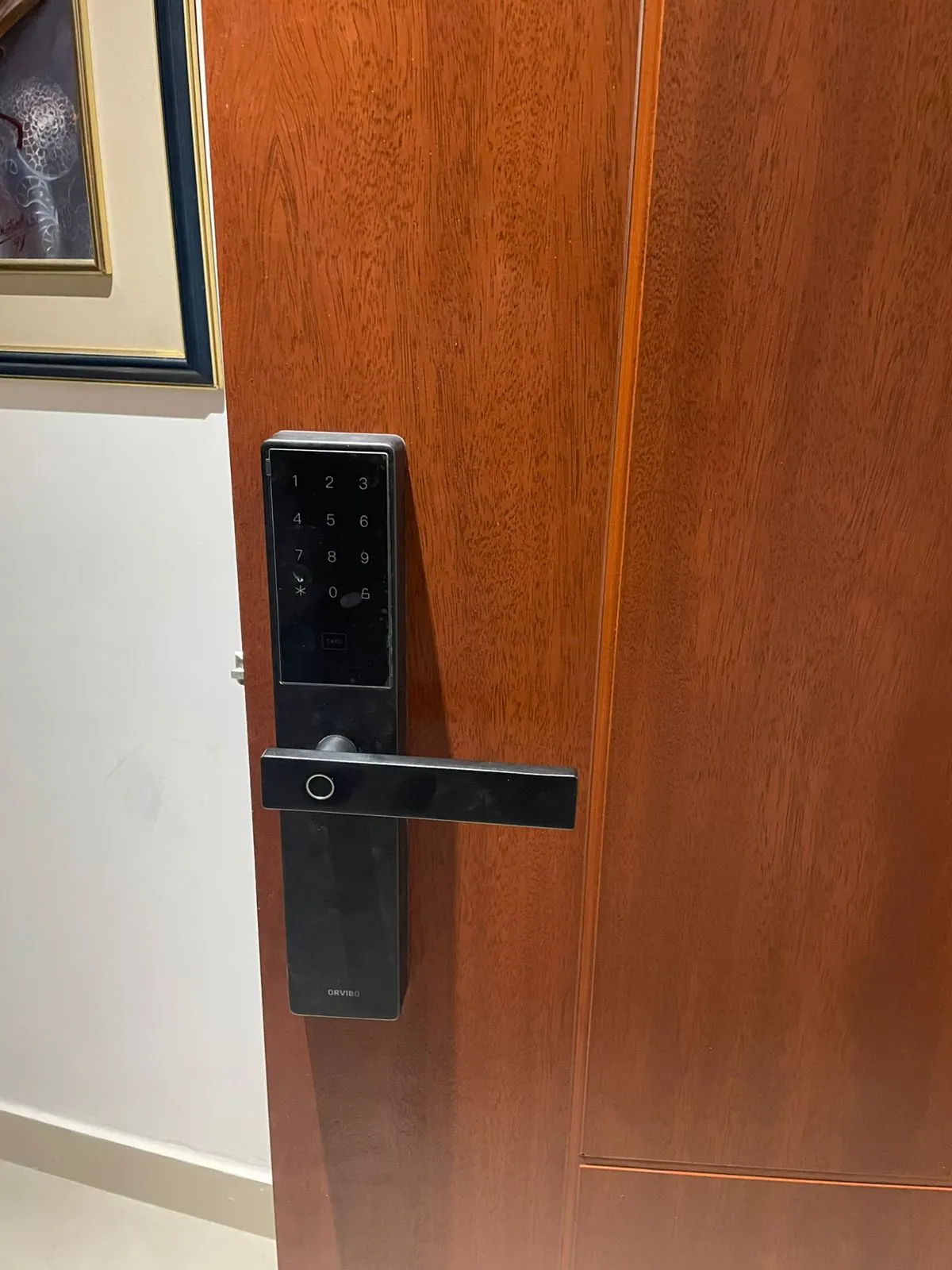
IP cameras and smart locks alone don’t equal intelligent security. The difference is in configuration and integration.
A poorly configured camera generates hundreds of false alerts — a tree moving in the wind, a neighbor’s dog — until the homeowner turns off notifications entirely. A well-configured camera with video analytics distinguishes people from vehicles, generates alerts only for unusual activity, and logs with time and zone context.
Key questions for a real security system:
- What happens when power goes out? (Is there a UPS? Do cameras keep recording?)
- Are recordings stored locally or dependent on a cloud service that could disappear?
- Can the system distinguish between household staff and an unexpected presence?
- Are alerts actionable, or are they noise?
A security system integrated with Control4 can coordinate: intrusion detection, all-camera recording activation, exterior lights turning on, and owner notification — all in under 3 seconds.
4. Integrate Thermal Comfort and Natural Light
In warm climates like coastal Ecuador, air conditioning represents both the largest electrical load and the biggest source of discomfort when poorly managed.
Smart climate control isn’t just programming temperatures. It means coordinating the HVAC with:
- Occupancy sensors: equipment doesn’t cool empty rooms
- Motorized shades: during peak solar hours (10 AM - 4 PM), shades lower automatically to reduce thermal load — cutting AC energy use in that space by 30-35%
- Family schedules: the system anticipates when you’ll need climate control and prepares the environment before you arrive, not after
- Open windows: if a sensor detects an open window, the system can shut off that zone’s AC or send an alert
This coordination doesn’t just reduce the electricity bill. It eliminates the “thermostat wars” that plague families: each zone can have its own settings, managed automatically.
5. Plan for Operation and Maintenance from Day One
A premium smart home system without documentation and a maintenance plan will inevitably degrade. Devices receive firmware updates. Protocols evolve. Credentials need periodic rotation. Integrations can break.
Homeowners who get long-term value from their investment have:
- Complete documentation: network topology, VLANs, credentials in a secure manager, scene map
- Remote monitoring: platforms like OvrC let the integrator detect system problems before the homeowner even notices
- Semi-annual maintenance plan: filter checks, camera verification, firmware updates, backup testing
- Programming backup: Control4 configuration backs up regularly to restore the system quickly if there’s a hardware issue
The cost of preventive maintenance is a fraction of emergency repair or reinstallation costs.
The Real ROI of Premium Smart Home
In Ecuador, well-executed smart home projects deliver a double return: daily experience and property value. Premium property markets in Samborondón and Guayaquil consistently show that properties with integrated, documented, and supported systems sell faster and at higher prices than comparable properties without automation.
The condition: the system must actually work, be well-documented, and have available support. A system that “used to be smart but doesn’t work well anymore” is actively negative for resale value.
Planning a smart home project in Ecuador? Contact us for a no-obligation evaluation with our team in Guayaquil.