
Invisible Smart Home Interior Design
How DomuLab works with architects and designers to make smart technology imperceptible yet fully functional in premium homes in Ecuador.
Visible technology was always the Achilles’ heel of smart homes: black boxes on top of the TV, cables emerging from baseboards, tower speakers competing with the furniture, and touchscreens that look like tablets taped to the wall. Those days are over.
Today, the best-designed automation systems are invisible. You don’t see them, but they completely transform the experience of the home. At DomuLab, we collaborate from the early stages of a project with architects and interior designers so that technology isn’t an add-on but an integral part of the architecture.
Keypads that are part of the design
Lutron Palladiom, RadioRA and Homeworks keypads come in finishes ranging from brushed aluminum to black anodized aluminum, satin white and several natural-stone tones. With custom engraving or no text at all, in compact sizes that blend into the existing switch panel.
The result is a physical control that visitors don’t identify as “technology”: it simply looks like a very high-quality switch. It is — but it’s also the control interface for every lighting scene on the floor.
Speakers that disappear into ceilings and walls
Architectural speakers from brands like Triad, Episode and Sonance are installed flush with the ceiling or wall, with paintable grilles matched to the color of the space. Once installed and painted, they’re practically imperceptible unless you know exactly where to look.
For rooms where even the edge of the speaker must be invisible, there are plaster-mount models (in-wall/in-ceiling invisible) that are completely covered by the final wall finish. You perceive only the sound, not the equipment.
Subwoofers, responsible for the bass that makes the experience visceral, can be installed under the floor in a technical chamber, or in specific cavities within the furniture. No visible footprint, no “black cube in the corner.”
Televisions that turn into art — or disappear
Samsung The Frame is the best-known option: when it’s off, it displays high-resolution artwork and looks exactly like a framed piece on the wall. From a distance it’s indistinguishable from a framed painting.
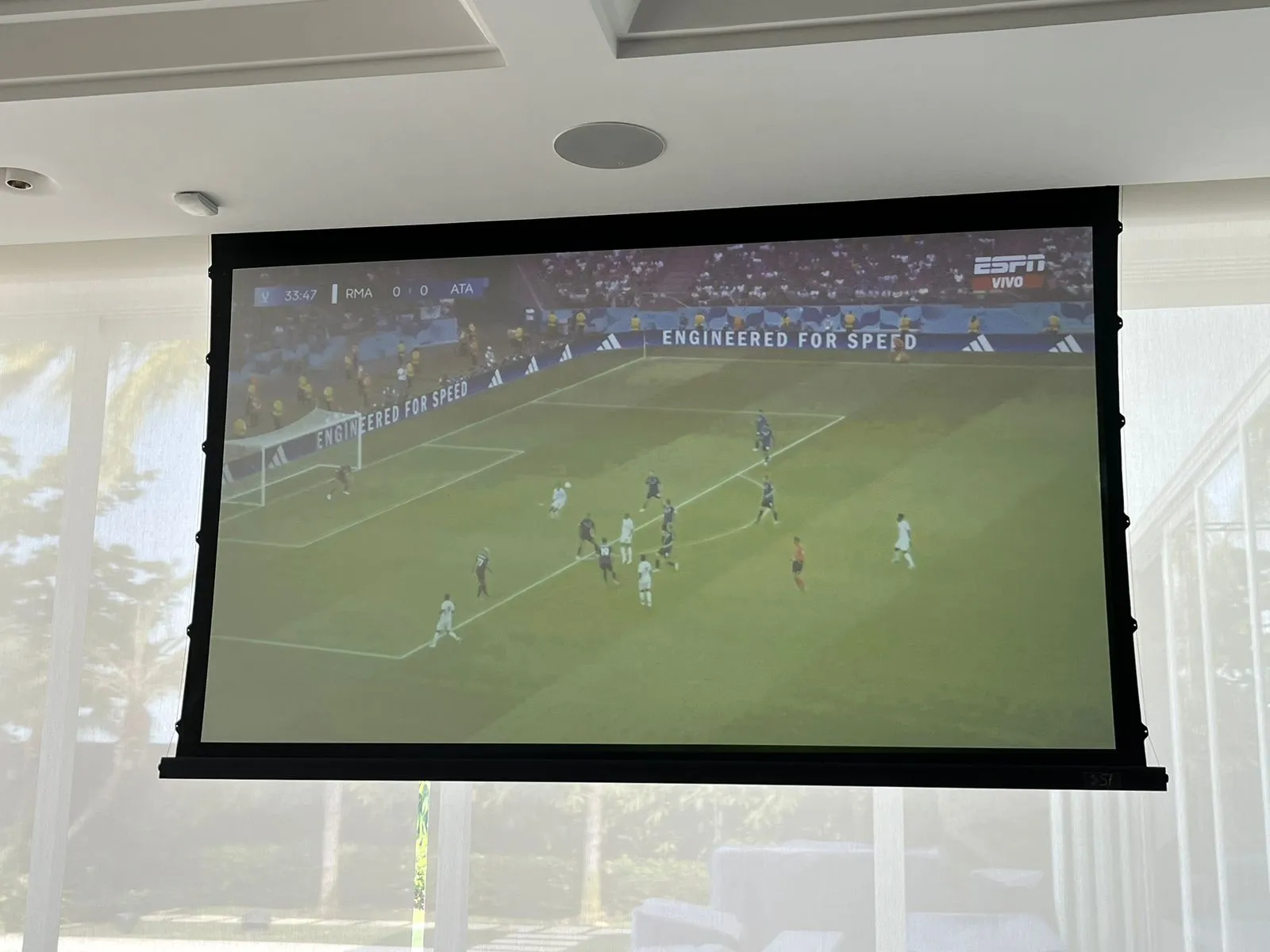
For spaces where the TV must not be seen under any circumstances, there’s the option of mounting the display behind a two-way mirror — when off it’s a decorative mirror, when on the image passes through the glass — or behind a piece of art on a motorized rail that slides aside when the system activates the entertainment scene.
Wiring you don’t see: the importance of prep work
All of this is only possible if the wiring is planned and installed at the right stage of construction: before the finishes. A meter of visible surface conduit is the symptom of technology added as an afterthought, not as part of the design.
In a well-integrated project, the electrician, the architect and the automation integrator coordinate from the plans onward: where the conduits go, how many conductors each circuit needs, where the equipment rack sits so it’s accessible but invisible, which walls need special-depth boxes for flush-mounted components.
Touchscreens that are part of the furniture
The latest Control4 control panels have bezels of less than 3mm, glossy or matte tempered glass, and flush-mount options that make them look like part of the wall. In high-end projects, they’re integrated into kitchen cabinetry, the head of the master bed or the living-room pedestals as if they had always been there.
Working together from the start of the project
The key to invisible integration is timing. When DomuLab enters the project at the design stage — before conduits are routed, before switch positions are defined, before furniture placement is decided — the result is technology nobody notices but everybody enjoys.
When technology is added at the end, on top of a finished project, compromises are inevitable. We can minimize them, but not eliminate them completely.
If your project is at the design or preliminary stage, that’s the moment to talk. Contact us to coordinate with your architect from the very beginning.